“I have been crucified with Christ; it is no longer I who live, but Christ who lives in me; and the life I now live in the flesh I live by faith in the Son of God, who loved me and gave himself for me” (Gal 2:20)
|
||||||||||||
2010       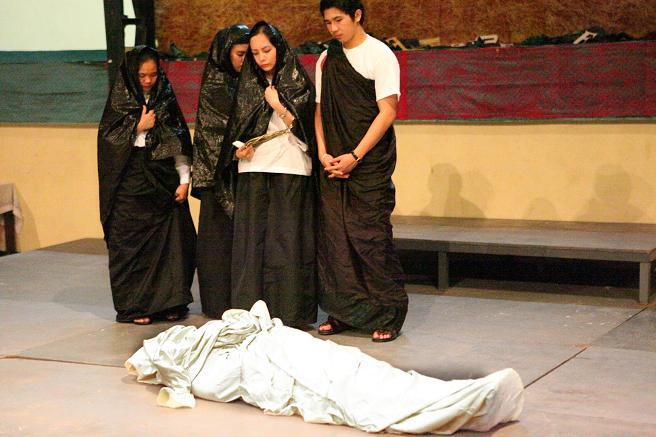 |
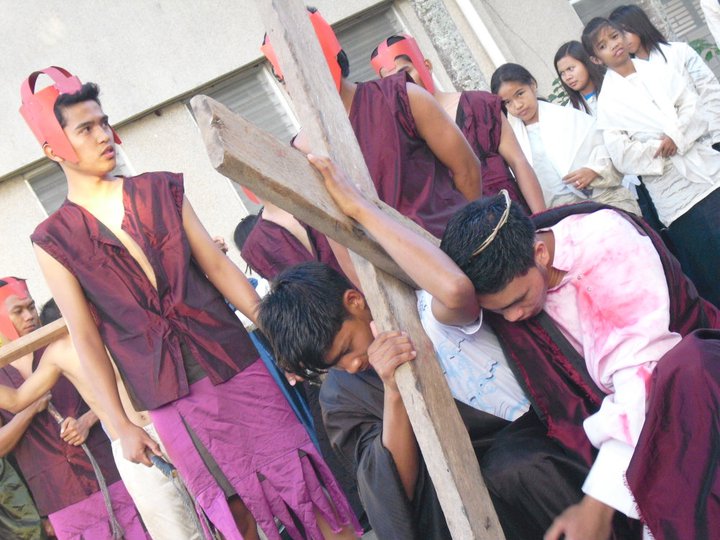
       This is true because Christ suffered for our sins once. He was an innocent person, but he suffered for guilty people so that he could bring you to God. His body was put to death, but he was brought to life through his spirit. (1 Peter 3:18) Yet now he has reconciled you to himself through the death of Christ in his physical body. As a result, he has brought you into his own presence, and you are holy and blameless as you stand before him without a single fault. (Colossians 1:22) United with Mary through suffering We all experience sadness through our own suffering, and have witnessed the suffering of those close to us. In The Passion we see how Mary witnessed the terrible ordeals of her own son being humiliated before the church elders, dragged before Pilate for judgment, scourged nearly unto death, and finally nailed to a cross to die. We now realize the fullness of Mary's humanity as we saw the intensity of her shock, disbelief and intense sorrow as she remained with her son into his death. The ordeal of Jesus' persecution and death are so horrific that nearly all of his followers abandoned him, yet Mary, Mary Magdalene and his apostle John remained. What enabled Mary to remain with Jesus and persevere through this suffering? How does the answer to this question speak to our lives today? Mary's love for Jesus as his mother, and her faith and hope in his divinity enabled her to endure the path to his death. And 2000 years later it is this same love for our fellow man and faith in God that enable us to persevere through any suffering the world may present. Often when someone else is suffering, the best way we can help is in simply being with them, and praying for them. We wish we could do more, yet often we cannot cure the illness or remove the injustice that causes the suffering. In The Passion, Mary knew she couldn't stop the torture and death of her son, yet her love for Jesus compelled her to remain with him despite the suffering this caused her. For Mary, her suffering was so intense that she had to be supported by Magdalene and the apostle John as she lingered between consciousness and unconsciousness. The intensity of both Mary's suffering and her love for her son are vividly portrayed in the scene where Mary and John scurry through the narrow streets in an attempt to see Jesus. Christ appears from behind the buildings ahead. His body weakened by scourging and the crown of thorns; he bends under the weight of the cross and falls to the rocky street. Mary stops short of the scene. She slumps on a doorstep, sighing in grief, immobilized by shock and fear. She knows that her son is divine. She knows that this was to be his earthly fate. But she remains a human mother watching her child suffer. She is brought back to action by a flashback in her mind. It is an image of Jesus as a little boy, falling and calling for his mother. Stirred by that memory, she runs to her son weighed down by the cross and comforts him. Although Mary couldn't save Jesus from death, she did everything that she could, and we can only imagine how much Mary's simple act of love meant to Jesus in the midst of his suffering. Mary as our model for witnessing suffering Was Mary's ability to endure her son's death a story of the past, or does it in some way speak to each of our lives today? The answer is definitively the latter — for all of us suffer and witness suffering. Each of us can resolve to imitate Mary in our own lives, by reaching out in love and compassion to assist and comfort others whom are suffering. At times this can be relatively easy, such as simply spending time with a friend whom is suffering with a problem and may need someone to listen. At other times the witnessing of suffering may require much greater effort, such as when a loved one is dying from a painful illness. During the times when our suffering is most intense, we can remember Mary in The Passion. Yes it can be hard, and at times we may feel as Mary did- that we can't go on. Yet Mary teaches us that through our love for others, rooted in our love for God, and faith in the resurrection and power of God's grace, we have the strength and courage to persevere through any suffering the world presents. |
|||||||||||